

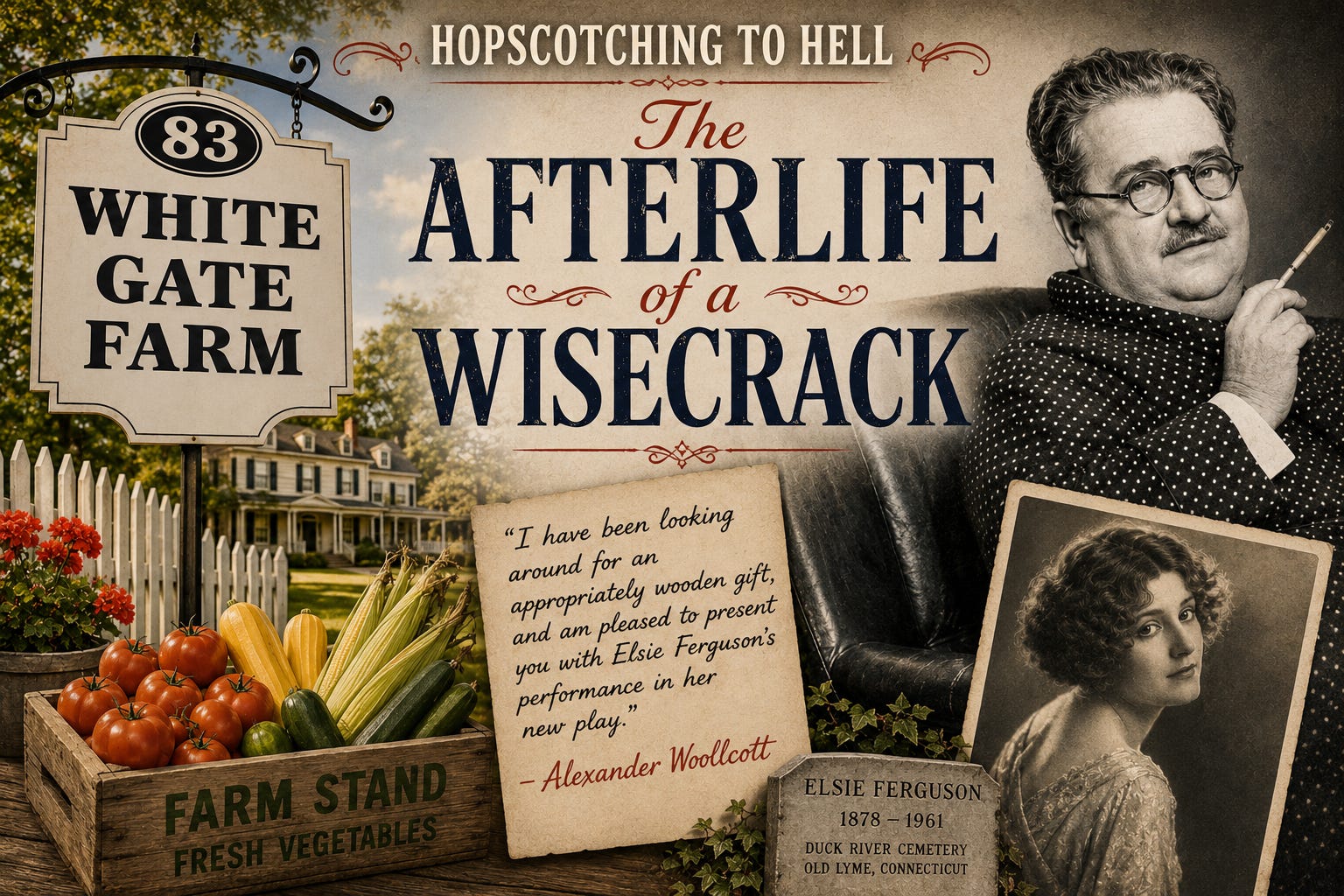
I’ve long been a devoted admirer of the Algonquin Round Table, that legendary decade-long gathering of New York writers who treated conversation as a full-contact sport. Starting in 1919, Dorothy Parker, George S. Kaufman, Alexander Woollcott, Robert Benchley, and their fellow assassins could reduce an overinflated ego to confetti before the soup arrived.
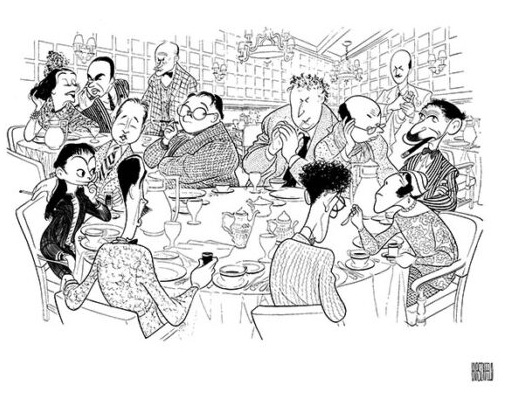
A few classics, offered here as evidence and entertainment:
“If all the girls who attended the Yale Prom were laid end to end,
I wouldn’t be at all surprised.” — Dorothy Parker
“It took me fifteen years to discover I had no talent for
writing, but I couldn’t give it up because by that
time I was too famous.” — Robert Benchley
“I saw the play at a disadvantage.
The curtain was up.” — George S. Kaufman
More Dorothy Parker, when asked to use the word “horticulture” in a sentence:
“You can lead a horticulture, but you can’t make her think.”
My all-time favorite – Alexander Woollcott once gave George S. Kaufman and his wife a fifth-anniversary present. It was free, exquisitely wrapped, and made entirely of splinters.
“I have been looking around for an appropriate wooden gift and am pleased
to present you with Elsie Ferguson’s performance in her new play.”
Wisecracks are supposed to have a short shelf life. They get a laugh, they’re repeated for a while, and eventually they disappear.
This one took a century to reach a farm stand in East Lyme, Connecticut.
Anyone who knows me can attest that I know everything about some of the most obscure actors and 20th century theater history, which makes it all the more humbling that I knew nothing of poor Elsie.

Naturally, curiosity got the better of me, and that’s when the rabbit hole opened, as rabbit holes do.
I had no idea that researching her would eventually lead me to a farm stand in East Lyme, Connecticut.
Elsie Ferguson had been one of Broadway’s great beauties, a major stage star, and later one of the queens of silent films. During her lifetime she was famous enough that audiences flocked to see her and critics took careful aim at her. Today, unless you’re a theater historian or a silent-film enthusiast, she’s slipped almost entirely out of public memory.
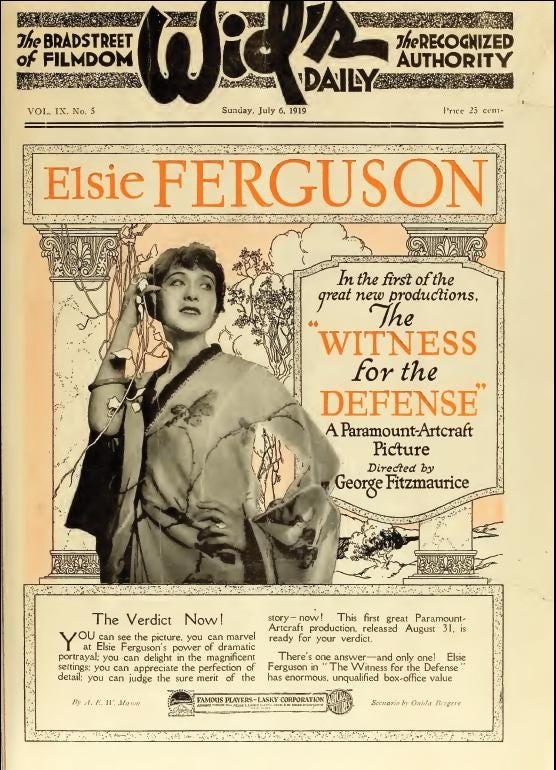
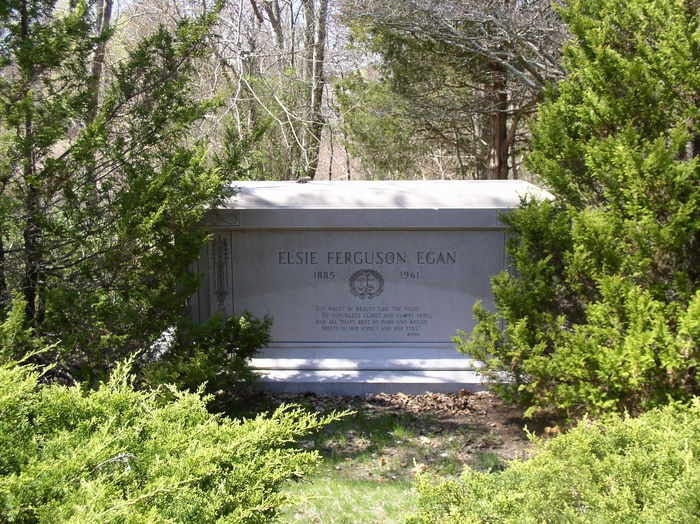
Through dogged research (a/k/a Google) I learned that after she retired from the stage, Elsie Ferguson settled on an estate called White Gate Farm in East Lyme, Connecticut. She lived there quietly for years and is buried a few miles away in Duck River Cemetery in Old Lyme.
That proverbial second shoe dropped.
In 1986, I became Director of Marketing at Long Wharf Theatre in New Haven. One of the very first major events I attended was a fundraising gala, thick with boldface names, honoring the actress Colleen Dewhurst.
The location? White Gate Farm, East Lyme, Connecticut. The owner of the farm: one of Long Wharf Theatre’s founders, Ruth Lord. That’s Ruth Du Pont Lord.
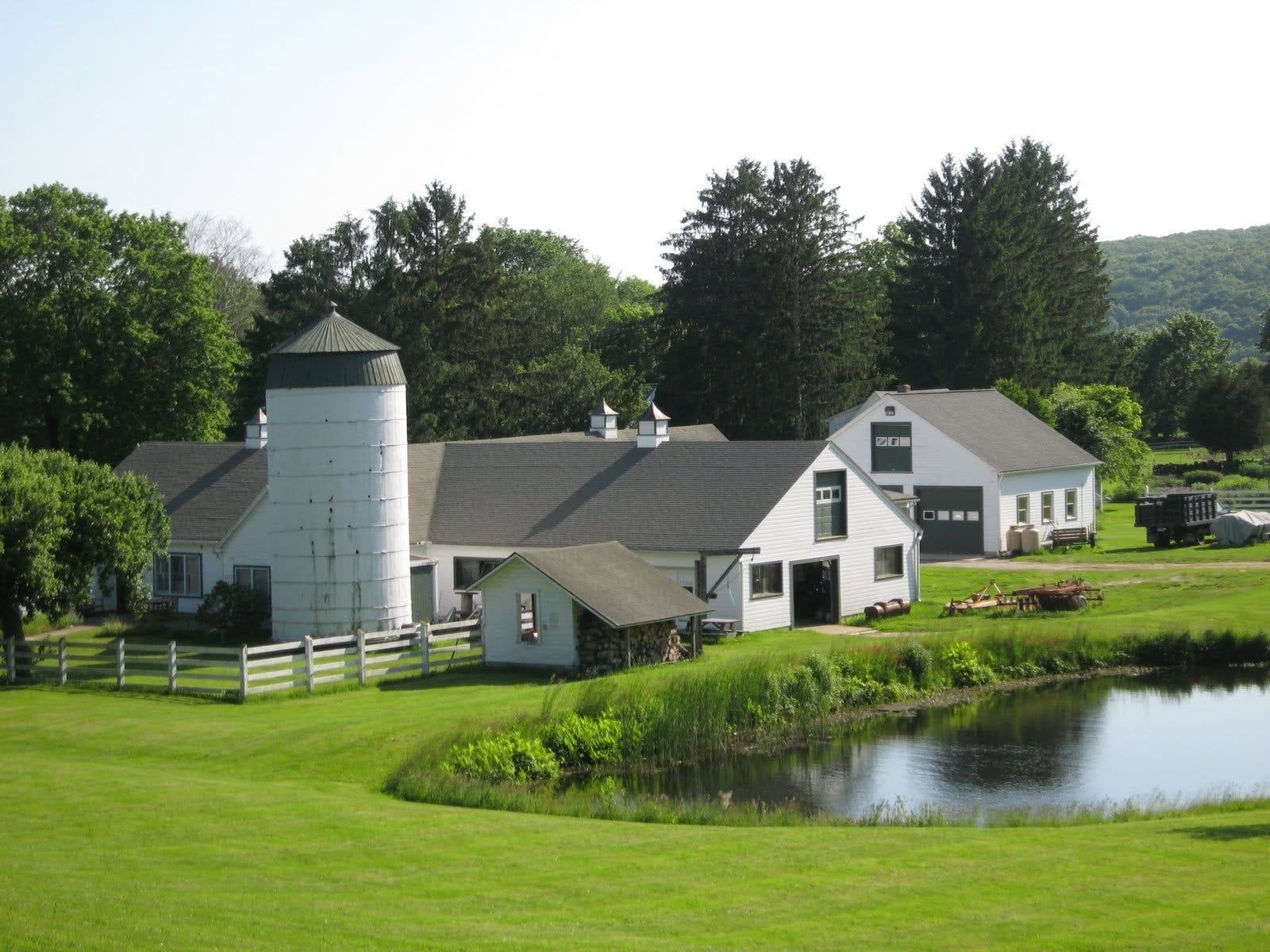
Over the next three decades I attended Christmas parties there, intimate dinners, fundraising events, and countless gatherings hosted by Ruth. A favorite memory: an intimate dinner for four. As we’re entering the dining room Ruth announces,
“I hope everyone likes tongue. We’re having tongue tonight.”
I may have quietly gagged. How, exactly, was I going to manage to eat something as vile as tongue? But my mother raised me right, and I knew I had to politely endure.
Much to my surprise, it was delicious.
After Ruth’s passing in 2014, White Gate Farm remained part of my orbit because her daughter Pauline established a farm stand there and continues to operate the residence as a B&B.
I stop by there for fresh vegetables to this day.
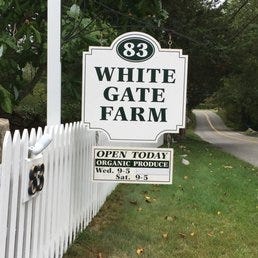
For years I wandered the grounds without the slightest inkling that I was walking through the final chapter of Elsie Ferguson’s life. The actress whom Alexander Woollcott had skewered with one immortal sentence had quietly retired to a place I came to know remarkably well.
History has a peculiar sense of humor. I love the serendipitous collisions between time and space.
The Algonquin wisecrack, tossed off over cocktails nearly a century ago, unexpectedly leads to a Connecticut farm where I buy fresh produce.
If Alexander Woollcott had known that his joke would still be traveling a hundred years later, eventually coming to rest beside bins of tomatoes and sweet corn in East Lyme, I like to think he’d have approved—and asked for a discount.
You, too, can walk in Elsie’s footsteps: White Gate Farm
History has a funny habit of hiding in plain sight. One day it’s an Algonquin wisecrack. The next it’s a quiet farm on the Connecticut shoreline...or perhaps the perfect place to call home.
When I’m not chasing theatrical rabbit holes, forgotten Connecticut stories and the occasional basket of tomatoes, I’m helping buyers and sellers discover their own corners of the Nutmeg State.
If you’d like to explore Connecticut from a different perspective:
🏡 Connecticut Weekend Homes
📖 Connecticut Baedeker
💡 David Mayhew’s Real Estate Knowledge Base
🌲 Buy Your Second Home First
Still hopscotching...
David